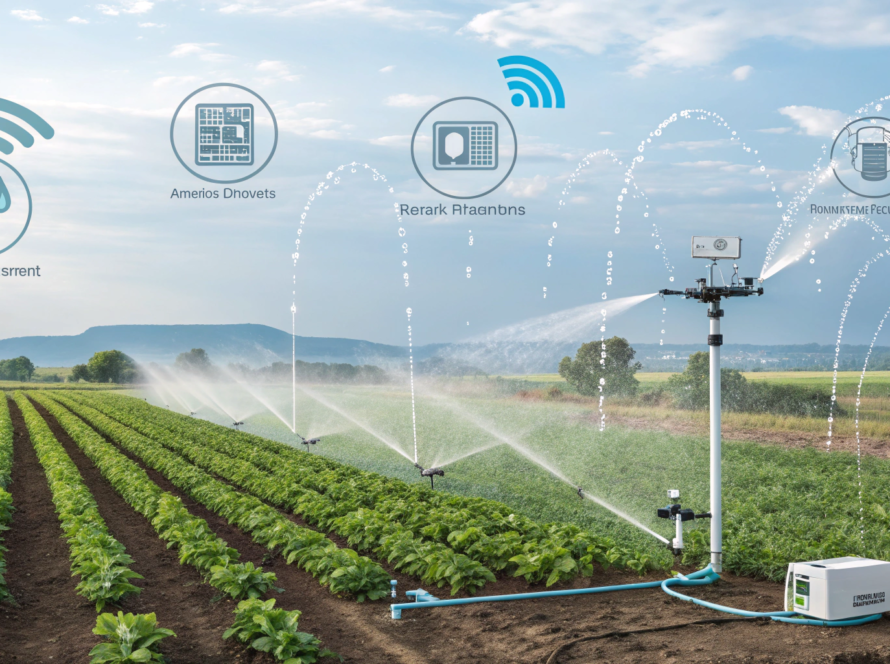
Agriculture is a complex system where soil, water, plants, and the atmosphere interact continuously. This interaction, often termed the soil-water-plant-atmosphere continuum (SWPAC), governs plant growth, irrigation efficiency, and ultimately crop productivity. Understanding how water moves from soil to plant roots and then transpires into the atmosphere is crucial for designing effective irrigation strategies, managing water resources, and enhancing food security in water-scarce regions like Pakistan.
By studying these relationships, farmers can make informed decisions on when, how, and how much to irrigate, researchers can improve water management technologies, and policymakers can devise strategies for sustainable agriculture under changing climate conditions.
1. Components of the Soil-Water-Plant-Atmosphere System
- Soil
- Acts as a reservoir for water and nutrients.
- Soil texture (sand, silt, clay), structure, and organic matter determine water retention and infiltration.
- Well-structured soils store water efficiently and allow roots to access it.
- Water
- Exists in three forms in soil: gravitational, capillary, and hygroscopic.
- Only capillary water is available for plant uptake.
- Water movement in soil depends on hydraulic conductivity, moisture gradients, and soil porosity.
- Plant
- Roots absorb water and nutrients.
- Crop species differ in root depth, water uptake efficiency, and drought tolerance.
- Stomatal behavior regulates transpiration in response to water availability and atmospheric demand.
- Atmosphere
- Drives evapotranspiration through temperature, humidity, wind, and solar radiation.
- High evaporative demand can increase water stress, even when soil moisture is adequate.
2. Water Movement in the System
- Soil to Root (Capillary Flow)
- Water moves from wet soil areas to drier root zones through capillary action.
- Deep soils with good structure allow efficient lateral and vertical water distribution.
- Root Uptake
- Roots absorb water through osmosis.
- Root density and depth are critical for maximizing water absorption, particularly under limited water conditions.
- Plant to Atmosphere (Transpiration)
- Water moves through xylem and exits through stomata.
- Transpiration cools the plant but also contributes to water loss.
- Evaporation from Soil Surface
- Represents water loss not used by plants.
- Mulching, cover crops, and irrigation timing can minimize this loss.
3. Factors Affecting the Soil-Water-Plant-Atmosphere Relationship
- Soil Properties
- Sandy soils: fast drainage, low water-holding capacity.
- Clay soils: high water-holding capacity but poor aeration.
- Organic matter improves moisture retention and root penetration.
- Crop Characteristics
- Deep-rooted crops (e.g., sugarcane) access water from deeper layers.
- Shallow-rooted crops (e.g., vegetables) require more frequent irrigation.
- Climatic Conditions
- High temperature and wind increase evapotranspiration.
- Monsoon rainfall or irregular precipitation influences irrigation scheduling.
- Irrigation Practices
- Surface irrigation: more evaporation losses.
- Sprinkler or drip irrigation: more precise and reduces soil evaporation.
4. Implications for Irrigation Management
- Irrigation Scheduling
- Based on soil moisture, crop stage, and atmospheric demand.
- Prevents both water stress and over-irrigation.
- Water Use Efficiency (WUE)
- Maximizing yield per unit of water applied.
- Achieved by matching irrigation to crop water needs.
- Soil Moisture Monitoring
- Tools like tensiometers, neutron probes, and moisture sensors help monitor availability.
- Allows precise irrigation, especially in water-scarce areas.
- Climate-Adaptive Irrigation
- Adjusting irrigation timing and quantity in response to evapotranspiration and rainfall forecasts.
5. Challenges in Managing the Continuum
- Limited Farmer Knowledge
- Many farmers rely on fixed irrigation schedules rather than soil-crop-atmosphere conditions.
- Variable Water Availability
- Groundwater depletion and erratic rainfall affect reliability of irrigation.
- Soil Degradation
- Salinity, compaction, and erosion disrupt water movement and root uptake.
- Climate Change
- Rising temperatures and shifting monsoon patterns increase evapotranspiration and water stress.
6. Strategies for Optimization
- Integrated Soil and Water Management
- Maintain soil structure through organic amendments and reduced tillage.
- Combine efficient irrigation systems (drip, sprinkler) with moisture monitoring.
- Crop Selection and Rotation
- Choose drought-tolerant and deep-rooted crops for low-water conditions.
- Rotate crops to maintain soil health and optimize water use.
- Use of Mulches and Cover Crops
- Reduce evaporation losses.
- Improve soil moisture retention and soil organic matter.
- Technology Adoption
- IoT-based soil moisture and weather monitoring systems.
- Decision-support systems for precision irrigation scheduling.
7. Policy and Institutional Interventions
- Extension Services
- Training farmers on soil-water-plant-atmosphere principles.
- Incentives for Efficient Irrigation
- Subsidies for drip and sprinkler systems.
- Water Resource Management Policies
- Encourage conjunctive use of surface and groundwater.
- Promote climate-adaptive irrigation practices to mitigate water stress.
Conclusion
The soil-water-plant-atmosphere relationship is the foundation of sustainable agriculture. Understanding this continuum allows farmers to optimize irrigation, researchers to design precise water management systems, and policymakers to implement strategies that ensure food security under water scarcity. By integrating soil science, crop physiology, and climatic data, Pakistan’s agricultural sector can maximize productivity while conserving its precious water resources.
Efficient irrigation begins not just with pumping water but with understanding how water moves through the soil, how plants utilize it, and how atmospheric conditions influence its availability.