Pakistan’s agricultural sector—crucial for national food security and rural livelihoods—is facing unprecedented stress. Intensifying heatwaves and changing monsoon patterns are putting the productivity of staple crops like wheat, rice, maize, cotton, and sugarcane under severe pressure.
Extreme Heat and Its Consequences
During the catastrophic 2024 heatwave, temperatures in Sindh soared to nearly 49 °C, resulting in over 568 human fatalities and thousands of livestock deaths. This heat brou ght widespread heatstroke and devastated crops during critical growth stages. In 2025, an extended early-season heatwave struck Pakistan and India, stretching from April to July, and delivering extreme thermal stress well before the typical summer peak.
These extreme heat events have devastating effects on crop growth. In 2024, maize fields across parts of Pakistan suffered 20–30% yield losses due to heat stress during pollination and grain-filling. Similarly, the quality and harvest of rice dropped significantly as reproductive stages were interrupted by high temperatures and poor-quality seeds circulated among farmers.
Monsoon Disruptions: Floods and Variability
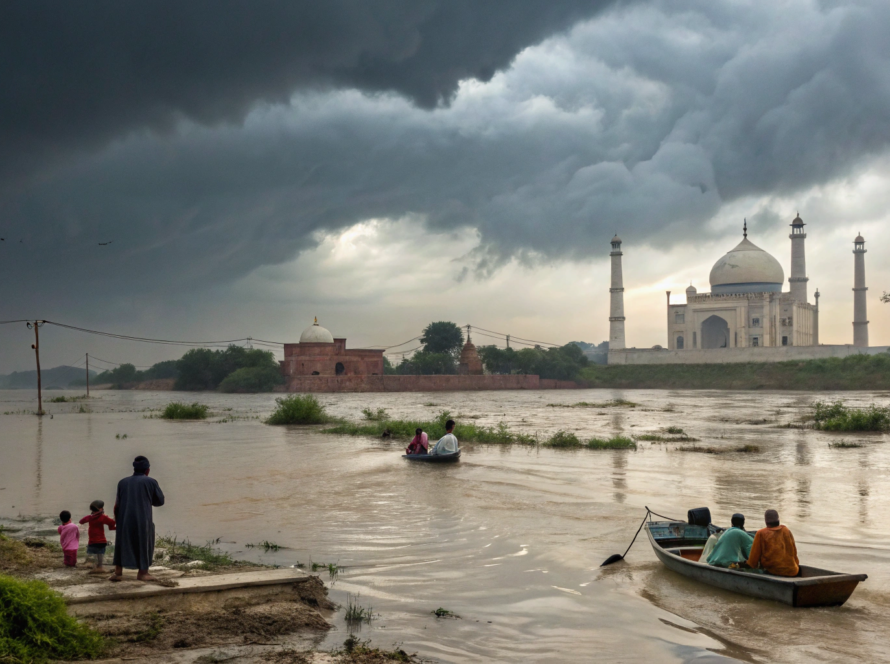
Monsoon patterns in Pakistan are becoming increasingly erratic. A recent study indicates that the devastating floods between June 24 and July 23, 2025, were intensified by 10–15% heavier-than-normal rainfall, directly linked to climate change. In mountainous regions like Gilgit-Baltistan, glacial melt combined with erratic monsoon rains triggered deadly floods, landslides, and damage to farmland.
The dual threats of drought and flood are converging to create agrarian instability. The catastrophic 2022 monsoon floods displaced over 33 million people and destroyed 2.3 million hectares of agricultural land. Without strategic adaptation, these weather extremes are projected to cause an 8–10% annual decline in agricultural GDP by 2030.
Heat and Crop Cycle Disruptions
A decade-long trend analysis across Punjab and Sindh reveals mean annual temperature increases of up to 1.4 °C, with continuing rise during spring season. Simultaneously, areas are experiencing higher variability in monsoon precipitation—some regions receiving 50–300 mm more rain annually, while others endure more drought.
These shifts are disrupting traditional planting and harvesting schedules. Erratic rainfall is forcing farmers to adapt cropping calendars and to move away from long-season crops—though many continue to face yield loss or crop failure as they lack resilient varietal options.
Wheat Vulnerability and Changing Water Needs
Rainfed wheat in the Pothwar Plateau is especially vulnerable to seasonal shifts. Both excessive and insufficient rainfall during critical stages—such as tillering and flowering—significantly reduce yields. Region-wide estimates show wheat requires 180–450 mm of water with varying critical timing during the Rabi season.
At larger scales, projections under climate scenarios reveal an expanding gap between crop water demand and actual supply—especially in Pakistan’s arid and semi-arid zones. Even under moderate scenarios, this gap could grow by 10–15%, undermining food production across the country.
Strategic Responses for Resilience
To safeguard agriculture amid rising heat and shifting monsoons, Pakistan must adopt climate-smart strategies:
- Advance Weather Advisory Systems: Enhance ICT tools, including satellite data and mobile alerts, to help farmers prepare for heatwaves, droughts, or floods. Business Recorder
- Shift to Climate-Resilient Crops: Promote heat- and flood-tolerant varieties—such as millet, drought-hardy wheat, and flood-resistant sorghum—suitable for various agro-climatic zones. The Agricultural EconomistClimate Impacts Tracker Asia
- Optimize Sowing Calendars and Irrigation: Adjust planting dates, apply drip and sprinkler irrigation, and utilize precision sensors to align water use with shifting crop needs.
- Invest in Adaptive Water Governance: Prioritize infrastructure for both drought buffering and flood drainage, including reservoirs and canal repairs.
- Support Inclusive Policies: Provide targeted training and financial assistance—especially for smallholders—to adopt new techniques and protect food systems.