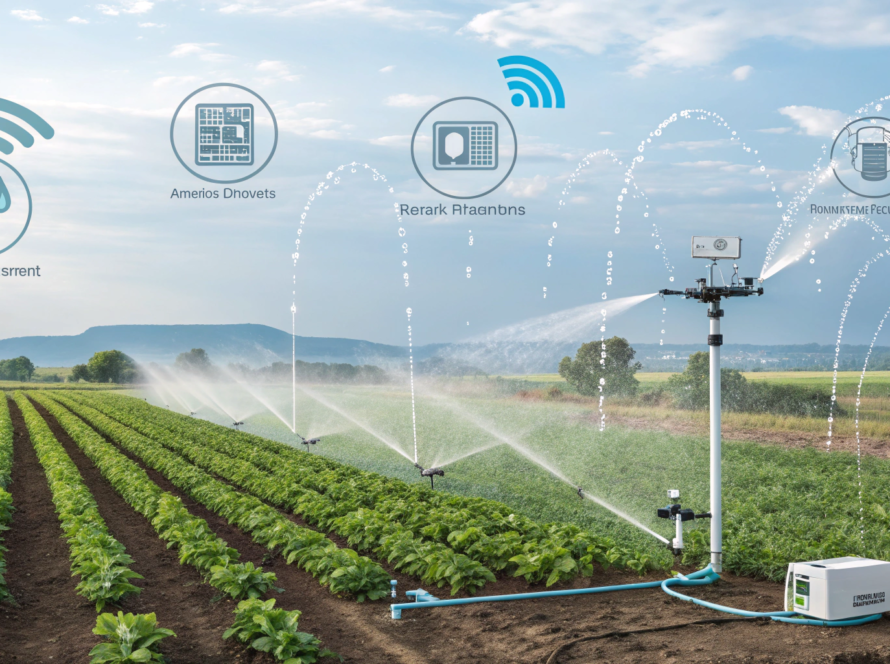
Water is the most critical input in agriculture, and its efficient management is essential for sustainable crop production. Crop water requirement (CWR) refers to the amount of water a crop needs to grow optimally, considering climatic conditions, soil type, crop growth stage, and irrigation efficiency. Understanding CWR helps farmers plan irrigation schedules, conserve water, and maximize yields. In Pakistan, where agriculture heavily depends on irrigation from canals, tube wells, and reservoirs, optimizing CWR is vital for maintaining food security, reducing water stress, and improving water productivity.
1. Components of Crop Water Requirement
- Evapotranspiration (ET)
- ET is the combined water loss through evaporation from soil and transpiration from crops.
- ET varies with crop type, growth stage, climate (temperature, humidity, wind, solar radiation), and soil moisture.
- Reference evapotranspiration (ET₀) is calculated using standard meteorological data and forms the basis for estimating crop water needs.
- Effective Rainfall
- Rainfall contributes to meeting crop water requirements but only part of it is effective for crops.
- Losses due to runoff, deep percolation, and evaporation reduce the usable water.
- Irrigation Efficiency
- Not all applied irrigation water reaches the root zone due to conveyance and application losses.
- Crop water requirement must be adjusted according to the efficiency of the irrigation system (furrow, sprinkler, drip).
2. Factors Influencing Crop Water Requirements
- Climate
- High temperatures and wind increase ET and water demand.
- Humidity reduces transpiration rates.
- Seasonal variations like monsoon or dry periods influence irrigation needs.
- Soil Type and Properties
- Sandy soils have low water-holding capacity, requiring more frequent irrigation.
- Clay soils hold water longer but may have poor drainage.
- Organic matter enhances water retention and root access.
- Crop Type and Growth Stage
- Water requirements vary with crop species (e.g., rice > wheat > maize).
- CWR is lowest during germination, rises during vegetative growth, peaks during flowering and grain filling, and declines during maturity.
- Irrigation Method
- Drip and sprinkler irrigation improve water use efficiency and reduce CWR per unit of applied water.
- Flood irrigation results in higher losses and overestimation of actual crop water demand.
3. Estimating Crop Water Requirements
- Penman-Monteith Method
- Recommended by FAO, it calculates reference evapotranspiration (ET₀) using temperature, humidity, wind speed, and solar radiation.
- Crop coefficient (Kc) is applied to ET₀ to estimate crop-specific water needs.
- CWR Equation
- CWR = ETc − Effective Rainfall, where ETc = ET₀ × Kc.
- Adjustments are made for irrigation system efficiency and local field conditions.
- Field Measurements
- Soil moisture sensors, tensiometers, and evapotranspiration gauges help verify theoretical calculations.
- Farmers can schedule irrigation based on real-time soil water data.
4. Importance of Matching Irrigation to Crop Water Requirements
- Prevents water stress, which reduces crop growth, flowering, and yield.
- Avoids over-irrigation, which causes waterlogging, nutrient leaching, and increased salinity.
- Optimizes water productivity, ensuring maximum yield per unit of water applied.
- Reduces energy and labor costs in pumping and distributing water.
5. Challenges in Applying Crop Water Requirements in Pakistan
- Limited Awareness and Technical Knowledge
- Many smallholder farmers rely on fixed schedules or traditional practices rather than scientific CWR calculations.
- Data Limitations
- Meteorological stations are sparse in some regions, making ET₀ estimation difficult.
- Variable Water Availability
- Canal water shortages and declining groundwater levels force farmers to irrigate less than crop needs.
- Climate Change Impacts
- Rising temperatures and shifting rainfall patterns increase water stress unpredictably.
- Irrigation System Inefficiencies
- Flood irrigation and poorly maintained channels reduce effective water delivery, requiring adjustments to CWR calculations.
6. Strategies to Optimize Crop Water Requirements
- Adopting Precision Irrigation
- Use drip, sprinkler, or micro-irrigation systems to supply water directly to roots.
- Reduces ET losses and improves water productivity.
- Soil Moisture Monitoring
- Soil sensors guide irrigation timing and quantity based on actual crop needs.
- Use of Climate and Crop Models
- Crop simulation models can predict water needs under different climatic scenarios.
- Mulching and Conservation Practices
- Organic mulches reduce evaporation and maintain soil moisture.
- Conservation tillage preserves water and soil structure.
- Government and Extension Support
- Training programs to educate farmers on scientific irrigation scheduling.
- Policies promoting water-saving technologies and subsidized efficient irrigation equipment.
7. Conclusion
Understanding and applying crop water requirements is essential for sustainable agricultural production. By integrating climate data, soil characteristics, crop types, and irrigation efficiency, farmers can make informed decisions, reduce water wastage, and maximize crop yields. Precision in meeting crop water needs not only safeguards water resources but also strengthens food security, reduces energy costs, and supports long-term sustainability of agriculture in Pakistan.
Effective irrigation is not just about supplying water—it’s about supplying the right amount at the right time to ensure maximum benefit for crops, soil, and farmers alike.