The New Face of Irrigation in a Changing Climate
Irrigation has always been the backbone of agriculture in Pakistan and across South Asia, sustaining crops in a region where rainfall is seasonal, irregular, and often unreliable. But with climate change reshaping rainfall patterns, increasing temperatures, and intensifying water scarcity, the traditional ways of irrigating fields are proving inadequate. Floods in one season and droughts in another reflect how unpredictable water availability has become.
In this uncertain reality, irrigation can no longer remain a fixed, traditional practice—it must evolve into a climate-resilient system. This means designing strategies that are flexible, efficient, and adaptive, ensuring water security while safeguarding food production.
Why Irrigation Faces Pressure Under Climate Change
Several interlinked factors explain why irrigation is becoming more vulnerable:
- Erratic Rainfall and Flood-Drought Cycles
- Monsoons arrive late or early, with higher variability.
- Flash floods damage irrigation infrastructure, while prolonged dry spells leave canals dry.
- Farmers who depend on predictable water delivery are left uncertain.
- Rising Temperatures
- Increased evapotranspiration demands more water for the same crop yield.
- Canal and surface water losses rise sharply in hot summers.
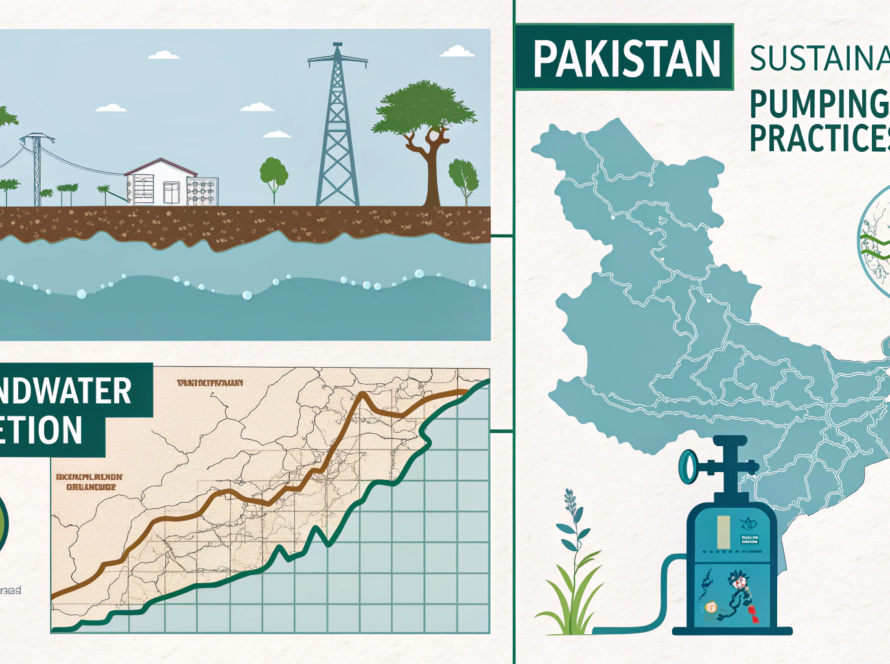
- Groundwater Over-Exploitation
- Tube wells have become a coping mechanism during canal shortages.
- Continuous pumping lowers the water table and increases salinity, making irrigation unsustainable.
- Infrastructure Limitations
- Much of Pakistan’s canal network is over a century old.
- Water losses through seepage, cracks, and mismanagement account for 30–40% of supply before it reaches the field.
- Crop-Water Mismatch
- High Delta crops like rice and sugarcane are widely cultivated, despite being unsuited for water-scarce conditions.
- This structural mismatch aggravates scarcity under climate stress.
The Need for Climate-Resilient Irrigation
The term “climate-resilient irrigation” goes beyond efficiency—it combines technical solutions, institutional reforms, and behavioral change. Its aim is to ensure that, no matter how variable rainfall or river flows become, irrigation systems:
- Deliver more crop per drop.
- Minimize losses and wastage.
- Build capacity to withstand droughts and floods.
- Encourage sustainable crop choices.
Climate-Resilient Irrigation Strategies
1. Improving Irrigation Efficiency
Traditional flood irrigation wastes up to 50–60% of water through deep percolation, seepage, and evaporation. Climate resilience begins with efficiency:
- Laser Land Leveling: Ensures uniform water distribution, reducing water use by up to 30%.
- Drip Irrigation: Supplies water directly to roots, ideal for orchards and vegetables. Saves 40–70% water while increasing yield.
- Sprinkler Systems: Useful for sandy soils and undulating lands, mimicking rainfall.
- Canal Lining: Reduces seepage losses in distributaries and minors.
These methods not only save water but also reduce energy and labor costs.
2. Smart Water Scheduling and Monitoring
In a changing climate, timing is as important as technique. Traditional guesswork-based irrigation wastes water and sometimes harms crops. New approaches include:
- Soil Moisture Sensors: Low-cost devices can indicate when fields actually need water.
- Remote Sensing & GIS Tools: Satellite imagery can help track crop water stress at the regional scale.
- Weather-Based Scheduling: Forecast-integrated advisories can guide farmers on irrigation timing to avoid losses.
This “smart irrigation” approach ensures water is applied only when and where necessary.
3. Crop Diversification and Water-Smart Choices
Resilience is not only about technology but also about what we grow.
- Shifting from rice to maize in certain areas can save billions of cubic meters of water.
- Introducing drought-resistant wheat varieties ensures yields even with low water supply.
- Encouraging horticulture and oilseed crops not only saves water but also improves farm income.
When irrigation systems are designed in harmony with crop selection, overall resilience improves.
4. Harnessing Groundwater Responsibly
Groundwater has become the silent backbone of Pakistan’s irrigation, but unsustainable pumping threatens its future. Climate-resilient strategies include:
- Conjunctive Use of Canal and Groundwater: Balancing both resources reduces stress on aquifers.
- Recharge Ponds and Check Dams: Capturing floodwater for aquifer recharge.
- Solar Pumps with Governance Controls: While solar pumps reduce energy costs, unregulated use could accelerate depletion. Policies must ensure balance.
5. Building Climate-Smart Infrastructure
Irrigation systems must be able to withstand climate extremes:
- Flood-Resilient Canals: Elevated embankments and strong linings reduce breach risks.
- Storage Reservoirs: Small and medium reservoirs at distributary levels can buffer droughts and store excess monsoon flows.
- Controlled Gates and Automation: Smart gates linked with hydrological data can optimize distribution in real time.
6. Institutional and Policy Measures
Without supportive governance, technical measures will fall short. Key reforms include:
- Water Pricing and Incentives: Encouraging efficient water use through fair pricing or subsidies for drip systems.
- Farmer Organizations (FOs): Empowering local groups to manage distributaries and ensure equity.
- Policy Alignment: Linking irrigation policies with climate adaptation strategies and SDGs.
7. Knowledge Sharing and Capacity Development
Climate resilience requires not only infrastructure but also knowledge. Continuous training, field demonstrations, and awareness campaigns are critical. Universities and research institutes can play a role by developing locally adapted solutions and disseminating them in simplified formats.
The Way Forward
Climate change is a reality that demands transformation in irrigation practices. Building resilience will not be achieved overnight—it requires layered actions at the farm, system, and policy level.
- At the farm level, efficiency technologies and smart scheduling can make every drop count.
- At the system level, investments in infrastructure and groundwater management will safeguard long-term sustainability.
- At the policy level, reforms and knowledge sharing can ensure equity, resilience, and innovation.
Conclusion
Pakistan’s irrigation system is at a crossroads. Climate change is challenging its very foundation, but it also provides an opportunity to redesign water management for resilience. By embracing efficiency, adopting new technologies, diversifying crops, and strengthening governance, irrigation can continue to sustain agriculture even in uncertain futures.
Climate-resilient irrigation is not just about survival—it is about thriving in a changing world, ensuring food security, rural prosperity, and water sustainability for generations to come.