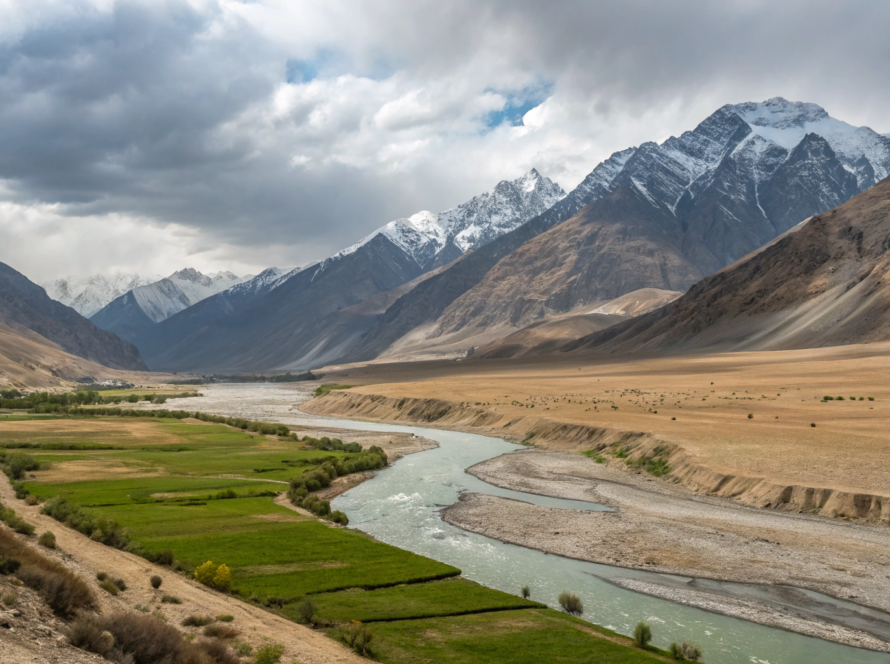
Farmers are at the frontline of the climate crisis. In many regions of Pakistan, agricultural production and rural livelihoods are directly shaped by changes in temperature, rainfall patterns, and the frequency of extreme events such as droughts and floods. Scientific studies show that farmers’ understanding of climate change and its impacts is a fundamental factor that influences their ability to adjust practices and protect their farms, incomes, and communities.
Multiple research efforts in Pakistan have documented this reality empirically. Surveys of farming households in Punjab and Khyber Pakhtunkhwa reveal that a significant proportion of farmers recognize changes in temperature and rainfall, and many adjust their practices accordingly. For example, a study of 450 households in Punjab found that awareness of climate change was widespread and that 58 % of farmers had already modified their farming, including crop selection and planting schedules, in response to perceived climatic shifts. However, adaptation was strongly linked to factors such as education, access to weather forecasts, market information, and extension services. Farmers who lack access to these resources are less likely to adopt effective adaptation measures.
Another study covering multiple districts of Punjab reported that about three‑quarters of farmers were aware of climate change and that this awareness was associated with demographic and socioeconomic variables such as age, land ownership, and extension support. In both studies, awareness did not automatically translate into comprehensive adaptation but did form an essential first step.
Understanding not only the phenomenon of climate change but also its practical implications for farming decisions allows agricultural communities to take proactive steps. Farmers with climate knowledge are better positioned to adjust crop types, timing of sowing and harvesting, water management techniques, and soil conservation practices. Conversely, lack of awareness acts as a barrier: without clear understanding of why weather patterns are shifting or how to interpret seasonal forecasts, farmers may delay or avoid adopting improved practices even when they are available.
For students and policymakers, the evidence underscores the importance of strengthening institutional support systems. Agricultural extension, rural education, and accessible weather information services consistently appear as determinants of effective adaptation. These systems amplify farmers’ capacity to interpret climatic risks and select climate‑smart agriculture techniques. Moreover, extension services can bridge the gap between scientific knowledge — often developed in research institutions — and practical, context‑specific solutions at the village level.
ICT tools, community radio, participatory workshops, and localized training programs can all enhance climate literacy among rural farmers, enabling them to interpret seasonal forecasts and manage risk more effectively. Such initiatives reduce uncertainty and improve the timing of critical decisions, such as when to plant crops, how to adjust irrigation, or when to apply soil‑conserving measures.
A strategic focus on climate awareness and knowledge dissemination is not simply an academic or developmental objective; it is a practical investment in resilience. When farmers understand the nature of climatic stresses and the evidence behind adaptation options, they make better decisions that sustain production, protect livelihoods, and contribute to broader food security. Strengthening climate awareness should therefore be a central component of national agricultural policy, rural extension reform, and community‑based climate education — ensuring that scientific evidence is translated into actionable knowledge that benefits all stakeholders across Pakistan’s agricultural landscape.