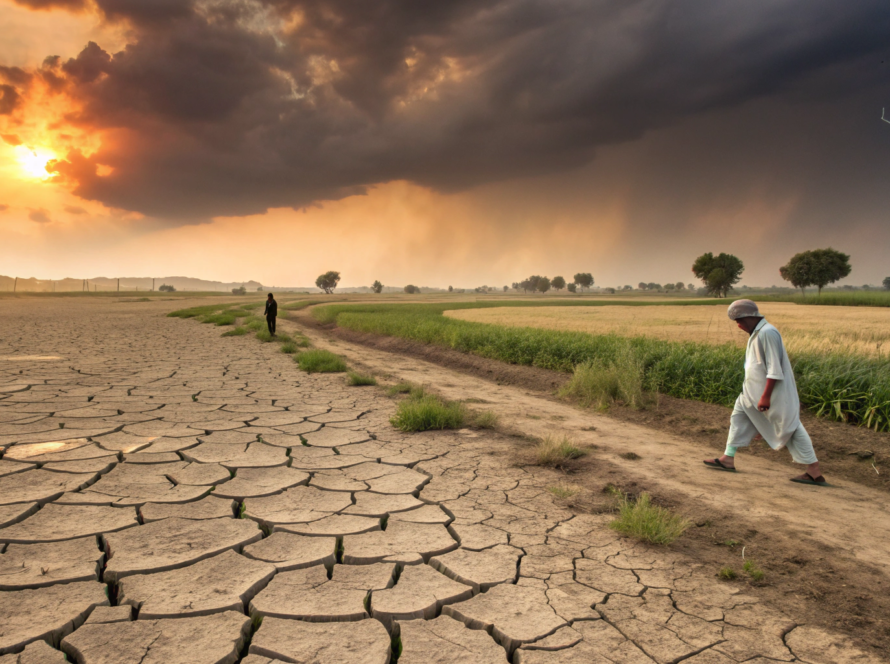
The 2022 floods that struck Pakistan were unprecedented in scale and consequence, driven by exceptionally heavy monsoon rainfall and climate‑related amplification of weather extremes. These floods inundated vast swathes of the country from June to October 2022, affecting an estimated 33 million people and overwhelming natural and built environments. The event exemplified how climatic stresses intersect with socio‑economic vulnerabilities to produce multi‑dimensional loss.
The human cost was severe. Official assessments report approximately 1,730 to 1,739 fatalities, with thousands more injured, making this one of the deadliest climate‑related disasters in Pakistan’s history. Nearly 8 million people were displaced from their homes, compelled to seek refuge in temporary shelters and relief camps as floodwaters eroded community stability.
The financial and economic losses were enormous. The comprehensive Post‑Disaster Needs Assessment (PDNA) led by the Government of Pakistan, World Bank, Asian Development Bank, European Union, UNDP, and other partners estimated that total damages exceeded USD 14.9 billion and economic losses reached about USD 15.2 billion, resulting in combined losses of over USD 30 billion. Furthermore, the scale of reconstruction and resilience building was projected at at least USD 16.3 billion, reflecting the cost of “building back better” in a climate‑resilient manner.
In terms of physical infrastructure, the destruction was widespread and disrupted essential services. Over 2 million homes were damaged or destroyed across affected provinces, leaving millions without secure shelter. The transport network was heavily compromised, with more than 13,000 km of roads and 439 bridges damaged or destroyed, severely hindering mobility, logistics, and access to markets and services. Public utilities and water systems were similarly impaired, exacerbating sanitation challenges and community vulnerability.
The education sector experienced profound setbacks. Thousands of educational institutions were damaged; assessments indicate that at least 17,205 public schools, colleges, and training centers were affected, with 6,225 fully damaged and 10,980 partially damaged, disrupting schooling for an estimated 2.6 million students and affecting nearly 94,500 teachers. This interruption in education translates into significant loss of school days and long‑term human capital development setbacks.
Agricultural and livestock losses were equally catastrophic. The floods submerged millions of acres of cropland, destroying staple and cash crops at critical stages of growth and threatening subsequent planting cycles. Estimates document over 1.16 million livestock deaths, decimating rural livelihoods and undermining food security in farming communities. Losses in agriculture and livestock directly reduced income for millions of households and diminished national food production capacity.
Public health impacts compounded the crisis. Damage to water and sanitation infrastructure forced many communities to rely on untreated sources, precipitating outbreaks of water‑borne diseases such as cholera, diarrhea, and vector‑borne illnesses including malaria and dengue. Limited access to healthcare facilities—many of which were themselves damaged—strained medical services and impeded effective disease control.
The disaster also triggered socio‑economic losses that extend beyond immediate monetary costs. The PDNA estimated that the national poverty rate could increase by 3.7 to 4.0 percentage points, potentially pushing between 8.4 million and 9.1 million more people below the poverty line. Multidimensional poverty—encompassing deprivations in education, health, and living standards—was projected to rise, placing an additional 1.9 million households at risk of non‑monetary poverty. These shifts reflect deep and enduring losses in human development and economic stability.
Beyond measurable statistics, the floods induced significant social disruption. Displacement fragmented communities and exposed vulnerable populations—such as women, children, and the elderly—to heightened risks of exploitation, food insecurity, and loss of livelihoods. Interrupted schooling, loss of productive assets, and prolonged displacement have long‑term implications for social cohesion and future opportunities.
Collectively, these layered impacts—human, financial, educational, health‑related, agricultural, and socio‑economic—underscore the complex nature of climate disasters and the critical need for robust disaster risk reduction and adaptive resilience strategies. For national planners and institutions like NDPAAS, the experience of the 2022 floods highlights the imperative of integrating early warning systems, resilient infrastructure investment, sustainable land and water management, and social protection mechanisms into national development planning to mitigate future climate‑related losses.